The Historic General Store of House Springs, Missouri
History of the Valentine Leight General Store (1894–1910)
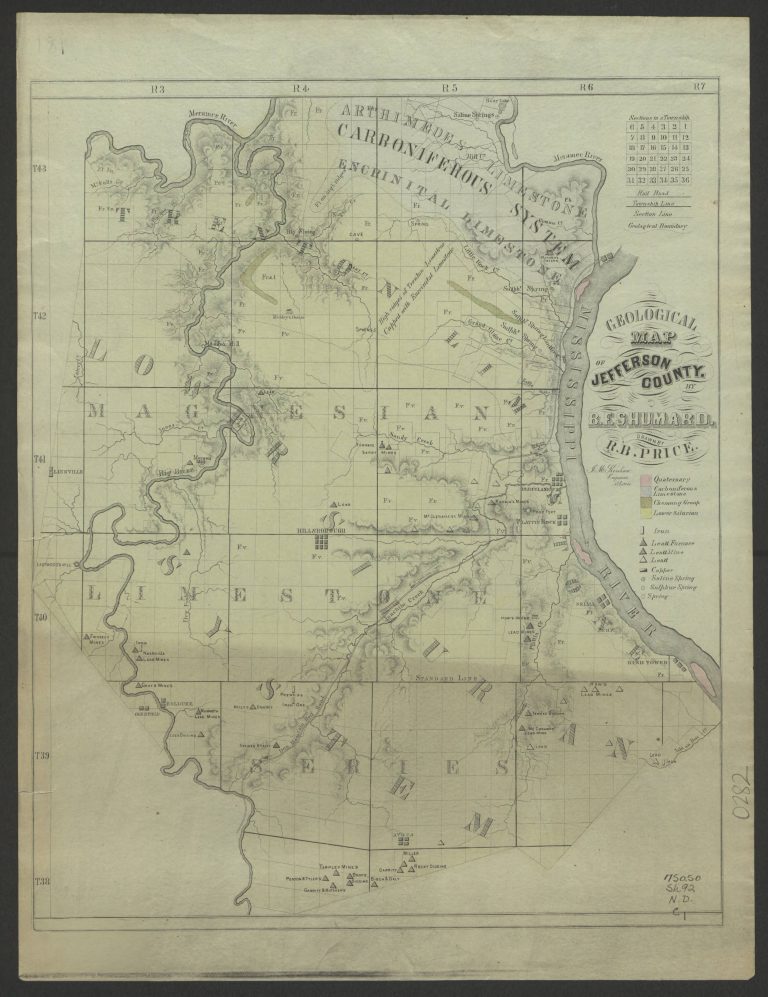
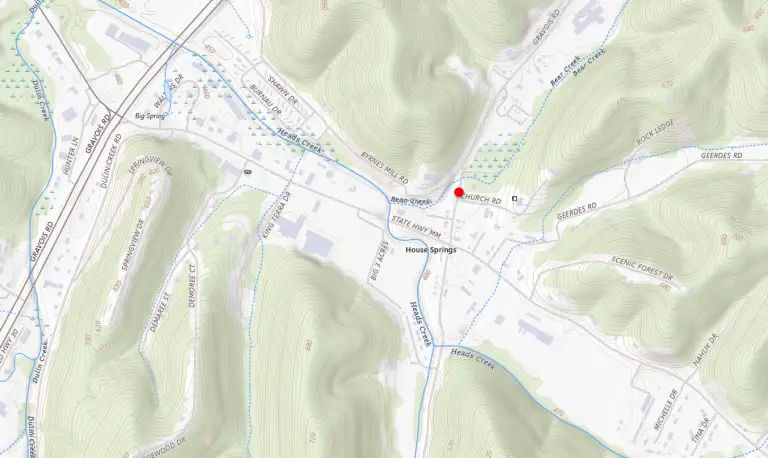
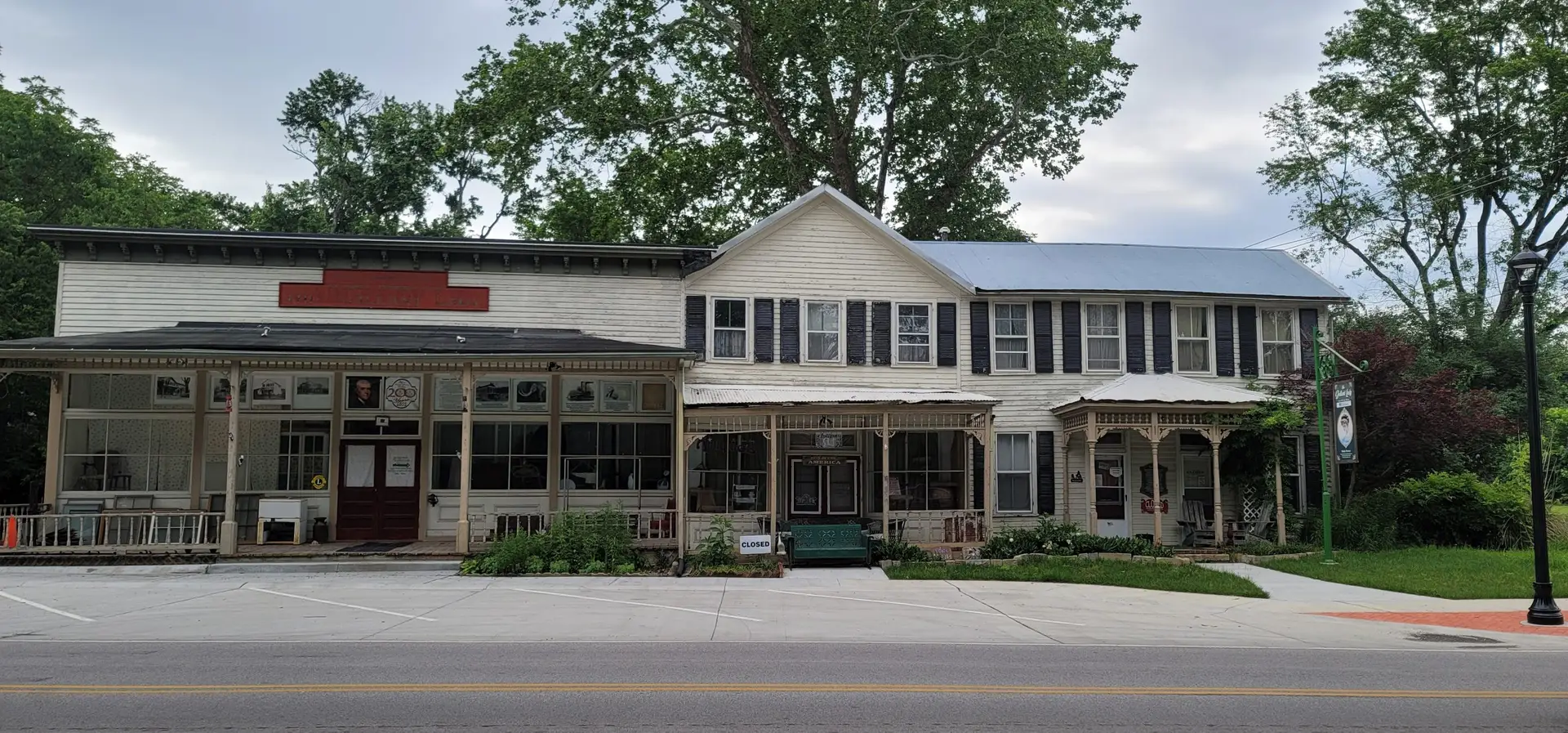
The Gallant Lady, formerly known as Garden of Eva, was once known as the Valentine Leight General Store. The building is a rare surviving two-story frame country store at 4566 Main Street (Old State Road MM) in House Springs, Missouri, roughly 25 miles southwest of St. Louis in Jefferson County.
With approximately 88 feet of frontage along Main Street and a depth of about 40 feet, the weatherboarded, green-painted building grew in three major construction phases between about 1894 and 1910. Long valued as a mercantile and community hub—and noted for its Late Victorian detailing—it was listed on the National Register of Historic Places in 1992.
In 1894, Valentine Leicht, Sr. purchased lots 13, 14, 15, and 16 of the Byrns Addition to Demaree from the House Springs Mercantile Co. for $190—an amount suggesting the lots were unimproved. Valentine Julius Leicht was born in Thuringia, Germany, in 1835, the third child of Sebastian Leicht (b. 1798, Baden-Wurttemberg, Germany) and Ursula Wirschin (b. 1806, d. 1871), who married in 1830. The family emigrated to the United States in 1842 and settled and farmed on land granted through a Presidential Land Grant issued and signed by President James K. Polk.
In November 1857, Valentine married Patrolena Swehla (b. 1840 in Böhmen, Austria). By 1859, or perhaps earlier, Leicht had acquired farmland in Jefferson County. The 1870 agricultural census recorded 40 acres, with twenty under cultivation in corn, wheat, and oats. By 1880, his residence had shifted from Rock Township, Jefferson County, Missouri, to Meramec Township, Jefferson County, Missouri, though he was still listed as a farmer in the 1880 census; his farm had grown to 200 acres (valued at $1,500), and he reported producing 150 pounds of butter—one of Jefferson County’s principal export items to St. Louis markets.
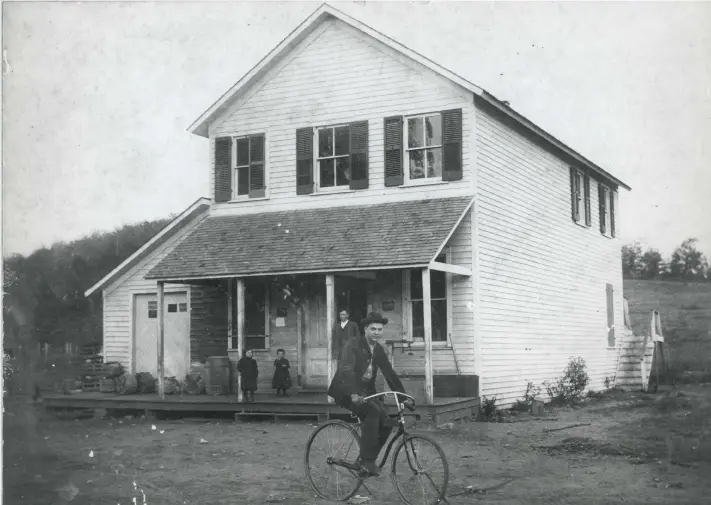
In 1894, the first section of the building was registered, and by 1900 Valentine Leicht was listed as a merchant, reflecting the establishment of the Leight General Store of House Springs, Missouri. Around this same time frame, between 1900 and 1910, the Leicht family anglicized their name to Leight.
The business was first listed as the Valentine Leight General Store in the 1893–94 Missouri Gazetteer & Business Directory. Straightforward and functional, the two-story frame building reflected a common pattern for 19th-century rural Missouri construction, often more practical than stylistic. Domestic in scale and form, it signaled its commercial purpose through its double door and its proportions—its depth roughly twice its width. The second floor served as storage. On the first floor, the front room was outfitted with counters and shelves, while the back room functioned as a stock room where merchandise was hung from spikes that still remain in the ceiling rafters.
Life at the Leight Family General Store
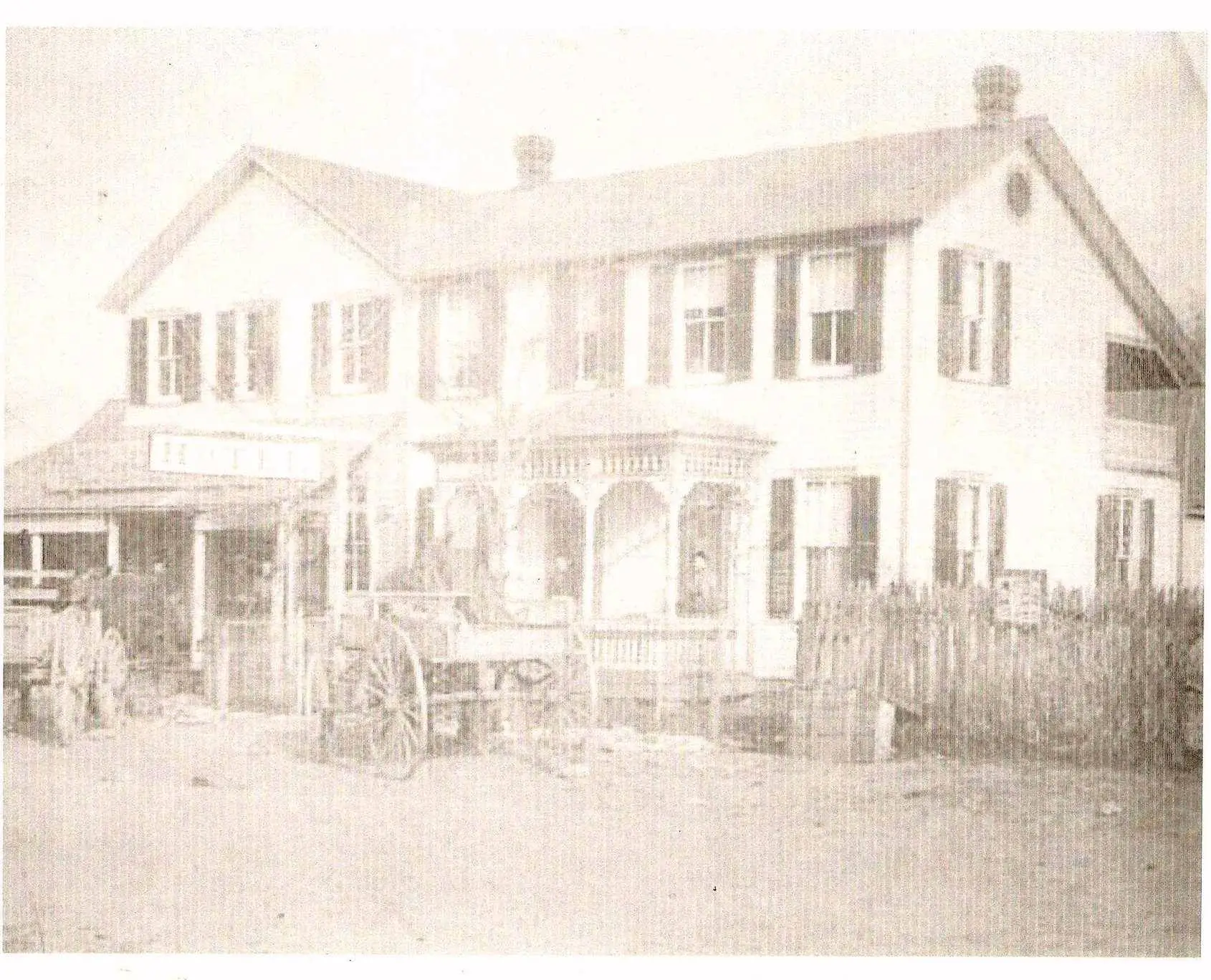
A few years after the original store opened, around 1900, Leight expanded the property with a four‑bay residential addition on the south. The addition featured double parlors and a kitchen on the first floor, with bedrooms on the second—space that accommodated the many traveling salesmen who called at the store. While the building’s basic form and plan followed familiar vernacular traditions, an awareness of contemporary style appeared in the Late Victorian porch trim and the detailing of the front doors.
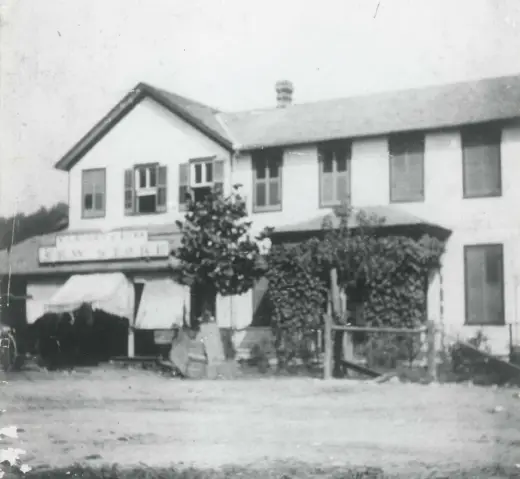
Around this same time, Leight remodeled the original building, updating the first‑story façade with a new, fully glazed storefront, and announced the improvement with a boldly lettered sign: “V. Leight New Store.” The store became a place where local families could purchase everything from groceries to clothes‑making materials, and where travelers could find lodging and conversation.
By 1910, Valentine Leight, Sr. had retired, and his son Valentine Leight, Jr. (1872–1922) took over management of the store, which also included his wife Mary’s millinery business. The store’s brisk commerce was underscored by construction around this time of a 40‑by‑40‑foot addition that nearly doubled the building’s size. Across the façade, tall, broad display windows reflected modern merchandising techniques intended to draw customers inside through maximum visibility of goods. Inside, sliding sashes made it easy to redress window displays as stock and seasons changed.
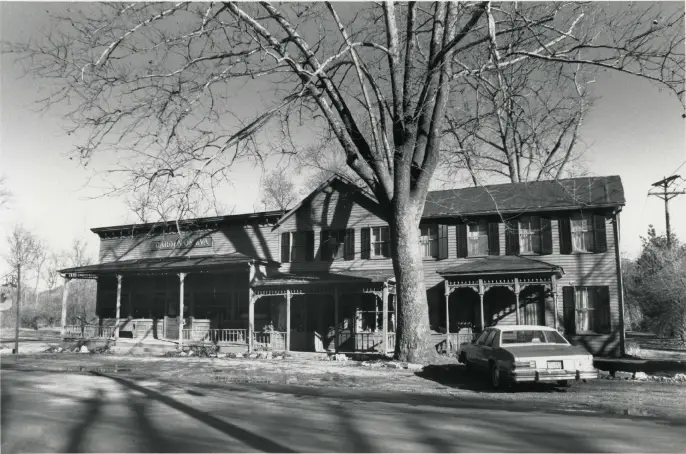
Compared with urban commercial architecture, however, the enlarged store remained stylistically conservative. Late Victorian spindlework porch trim and a high parapet enriched with decorative brackets lent ornament to the practical storefront. Inside, the ambiance of the old country store endures: a lofty 14‑foot ceiling, tongue‑and‑groove wall paneling, and original bins, shelves, and counters. An old kerosene pump still stands at the corner of the front porch, along with a water pump on the rear porch.
From Leight General Store to The Gallant Lady
Following Valentine Leight, Jr.’s death in 1922, the store remained under Leight family management for another generation. With his mother Mary, William Joseph Leight (born 1 March 1899), the first child of Valentine Leight, Jr., assumed day‑to‑day responsibility for the general store after his father’s death. During absences for his service in World War I, college studies, and further service in World War II, his sister Lillian and her husband, Moffat “Parker” Adams, had returned home to manage the business. The Leight General Store continued to serve as the area’s principal commercial center—an all‑purpose place where everything from groceries to clothing materials could be purchased.
More on the Leicht/Leight family HERE.
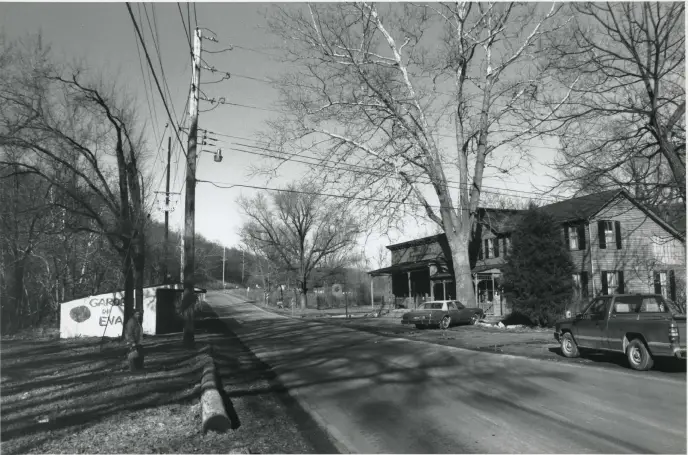
In 1969, Lillian Leight‑Adams closed the store and sold the building to St. Louisans Lee and Eva Jugloff, who reopened it as an antique and gift shop. The Jugloffs added plumbing and updated the electrical service, lived upstairs, and operated the Garden of Eva antique shop on the first floor.
In 1995, the property was purchased by the La Forest family. For nearly 30 years, Jan Groeteke‑La Forest operated her sign‑making business along with an antique and craft store from the building, rebranded as The Gallant Lady. The name was intended to reflect and honor the building’s endurance through time and the elements. The property remains family‑owned and occupied, but it is no longer open to the public as of 2024.
Architecture and Original Features
The building comprises an estimated 20,000 pounds of lumber, includes close to 700 square feet of glass, and has nine exterior doors. The proportions and materials echo the practical, vernacular architecture of late 19th‑century rural Missouri general stores.
Inside, much of the original character of the old country store endures. The first floor retains its high, approximately 14‑foot ceilings, tongue‑and‑groove wall paneling, original bins, shelves, and counters. The second floor, historically used for storage and later as living space, reflects the building’s dual domestic and commercial life. On the exterior, weatherboard siding, Late Victorian spindlework porch trim, and a high parapet with decorative brackets add modest yet distinctive ornament to an otherwise straightforward working building.
Tall, broad display windows across the later storefront addition were designed to showcase merchandise and draw customers in from Main Street. Sliding sashes made it possible to refresh these displays as goods and seasons changed, highlighting the store’s integration of modern merchandising ideas within a small‑town setting. On the porches, an old kerosene pump and a water pump still stand as tangible reminders of the site’s long service to the local community.
Flooding, Bear Creek, and Preservation Challenges
The store sits along Bear Creek in House Springs, a location that helped the community grow but has also posed serious challenges over time. The structure has endured significant flooding, including mid‑century events in 1954 and 1957, when water rose to approximately six feet inside the building. Later floods brought several feet of water inside again, notably in 2008, and multiple times in recent years with two significant flood events in 2024 (July & August), with additional smaller floods of lesser impact recorded over the years.
Most larger floods coincide with construction upstream of Bear Creek, which runs adjacent to the property. Poorly considered planning of construction zones upstream and near waterways is a notorious issue when areas experience rapid, often unregulated growth. The Valentine Leight General Store, now The Gallant Lady, stands as a case study in how historic buildings can be both vulnerable to and resilient in the face of changing land use, infrastructure projects, and climate‑related stresses on local waterways.