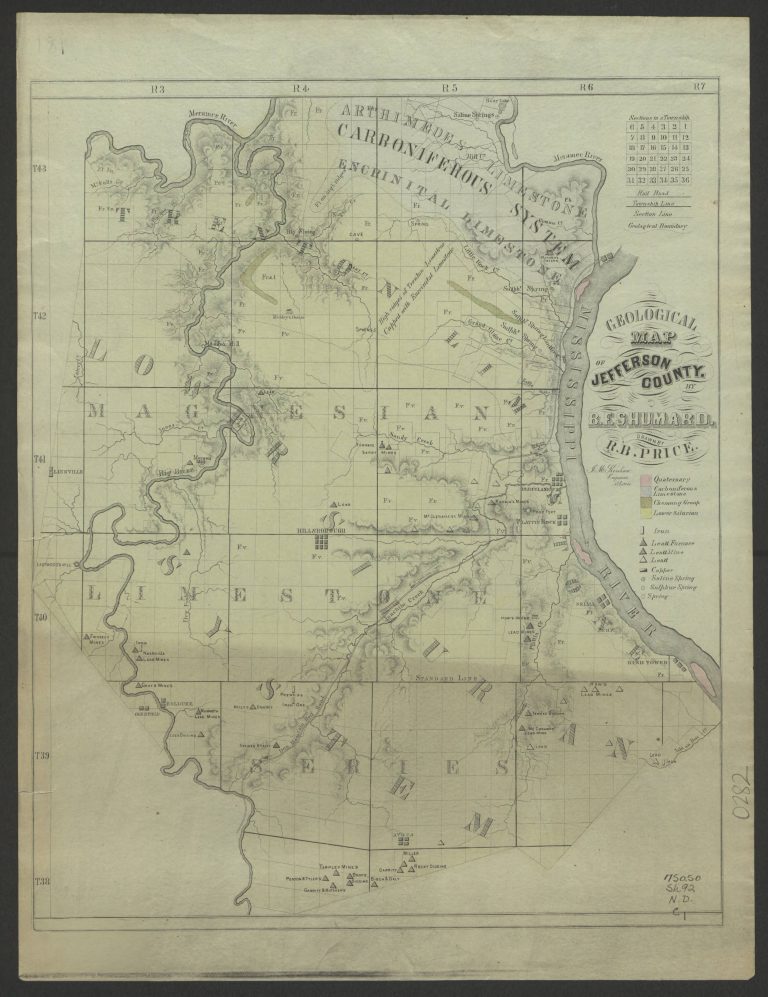
The abundant springs and rich bottom lands along the Big River and its tributaries drew settlers early to what is now north‑central Jefferson County, Missouri. Long before the area carried the name House Springs, its location at the junction of waterways, springs, and later wagon roads made it a natural stopping point and, eventually, a small service center for surrounding farms.
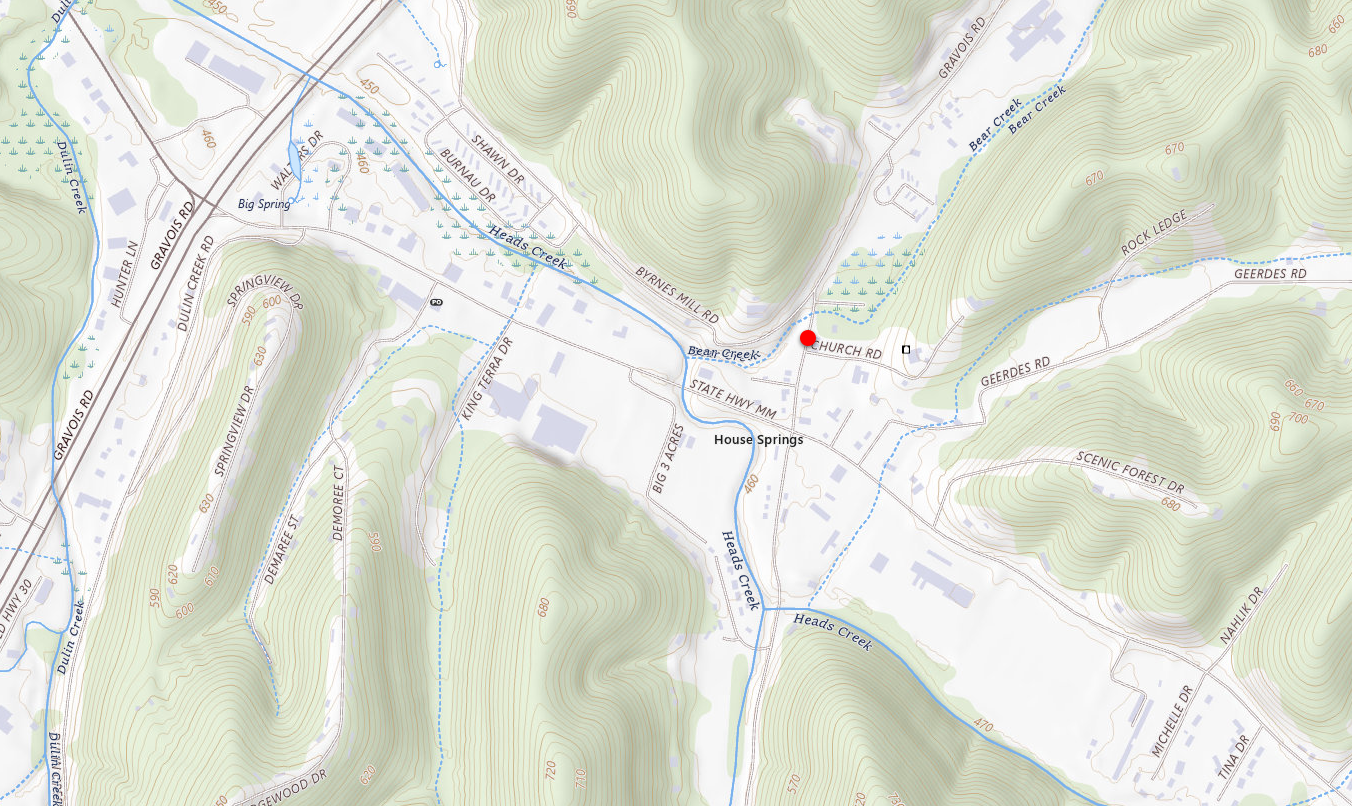
The first settlement at the future town site is believed to have been made more than two decades before Jefferson County was established in 1818. In 1795, James Head first farmed on the creek that still bears his name—Heads Creek (sometimes recorded as Hedge Creek)—which borders the southwest edge of the present‑day town. Within a year or so, Head moved away, and in 1796 he sold his land to German immigrant Adam House, who was drawn by the fertile soil, the natural spring, and the access to the Big River. House is remembered locally as a victim of what came to be known as the House Springs Massacre around 1800, an event that left a lasting mark on local memory and ultimately fixed his name to the landscape.
Over time, the settlement’s identity shifted from individual homesteads to a named place. For many years it was known as House’s Spring or House’s Springs, in reference to both the House family and the prominent spring near their dwelling, before gradually becoming the modern House Springs. That evolution reflected the community’s growth from a frontier outpost amid conflict with Native American groups to a more stable farming and trade center on the Big River and its tributaries.
In 1860, English‑born physician and extensive landholder/farmer Dr. George A. Smith purchased the town site from the estate of Cornelius H. Demaree. Demaree himself had been an ambitious merchant and early postmaster who envisioned a thriving town bearing his name, but his plans ended in bankruptcy in the 1850s, and his land was sold at auction. That same year, Smith platted the town of Demaree, laying it out along the west side of what is now State Road MM, intersected by a county road, and promoting it as a potential local hub connected to a future improved road to St. Louis.
A decade later, in 1871, Missouri‑born farmer Thomas Byrns subdivided part of his holdings on the east side of State Road MM and opened the Byrns Addition to Demaree. Byrns’ 1,200‑acre farm, valued at 10,000 dollars in the 1870 agricultural census, reflected the prosperity that successful farming and strategic landholding could bring in the Big River Valley. He reported foreign parentage in the population census and was likely related to a large Irish Byrns family that had settled in the broader area, illustrating the mix of immigrant and native‑born families that shaped the community.
House Springs’ advantageous location at the convergence of several county and state roads created excellent conditions for commerce tied to the agricultural trade of the Big River Valley. From House Springs, roads led northeast to St. Louis (about 25 miles), south to Hillsboro (the county seat, about 16 miles), and northwest to Eureka (a railroad shipping point, about 8 miles), while other connections reached landings on the Mississippi River. This network allowed area farmers to move corn, wheat, oats, livestock, dairy products, and timber out to markets and to bring manufactured goods, tools, fabrics, and household supplies back into the valley.
By 1876, the town’s modest population of about 50 residents supported two general stores, a saloon, and several artisan shop‑houses, including trades such as blacksmithing and carpentry that served both local needs and travelers passing through. In 1880, its residents represented a mix of German, Irish, and native‑born inhabitants—a pattern typical of many rural Missouri communities where European immigrants settled alongside families who had arrived from eastern and southern states earlier in the 19th century. This blend of cultures, faiths, and farming traditions shaped the rhythms of work, worship, and social life in House Springs, from church gatherings and school events to meetings at the local stores and mills.
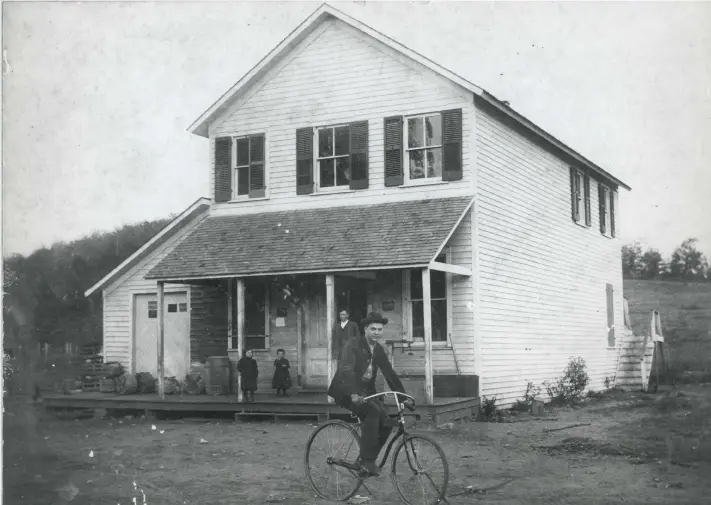
Into the late 19th and early 20th centuries, House Springs remained small but increasingly connected, a place where the road network, surrounding farms, and the nearby Big River supported a cluster of homes, stores, and services. Buildings such as the general stores, post office, and later the Valentine Leight General Store (now The Gallant Lady) formed a visible main‑street core that anchored the community’s identity. Though modern highways, suburban growth, and changing economic patterns have transformed the area, the story of House Springs still begins with its springs and creeks, the Big River and Bear Creek, and the families who chose to build their lives at this crossroads in Jefferson County.